Papal Fortifications & the 1527 Sack – Bastions and Survival
How papal fortifications reshaped Castel Sant'Angelo and how the 1527 Sack of Rome exposed and validated its defensive logic.
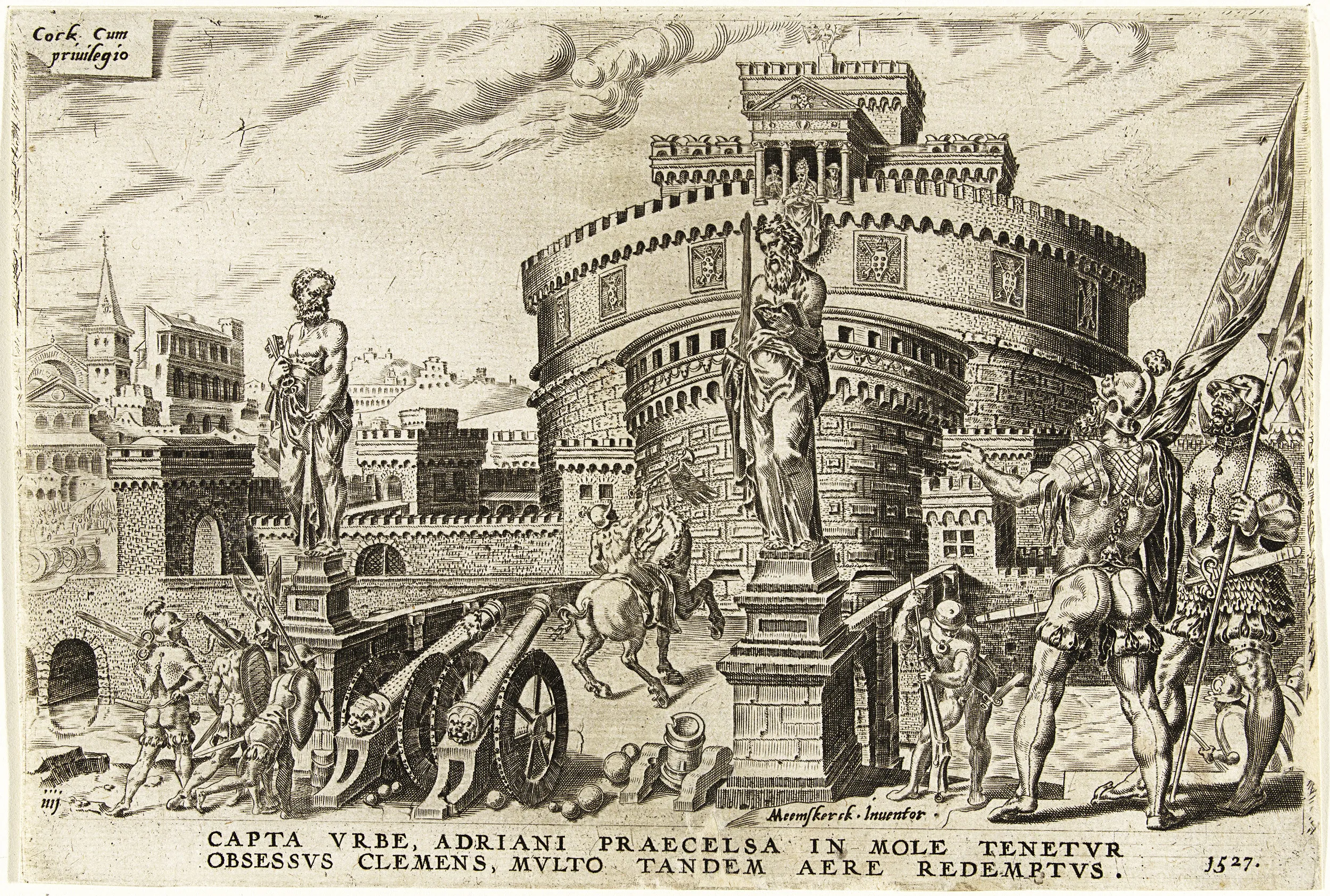
Fortification was a long project: Boniface IX prepped for cannon age; Nicholas V layered crenellations, towers, and stores; Alexander VI added bastions, moat, and cells.
1. The Fortification Phases
- Boniface IX: foundations for artillery; prison use formalized.
- Nicholas V: crenellated curtain, three towers, logistics rooms for grain and oil—siege resilience.
- Alexander VI: fourth tower, bastions, moat, torture rooms; a hard edge to papal power.
2. 1527: Failure of Politics, Trial by Fire
Troops unpaid; discipline collapsed. Churches sacked, libraries looted, bodies unburied—disease followed. Clement VII survived via Passetto, but Rome’s population collapsed from ~55,000 to under 10,000.
3. Inside the Fortress During the Crisis
- Apartments served governance and refuge; the Stufetta offered modern comforts—jarring contrast to agony outside.
- Artillery platforms used; defensive choreography managed entry flows along ramp.
4. Aftermath & Memory
Trauma redirected papal policy and patronage; the fortress remained symbol of last-resort sovereignty.
Bottom Line
By 1527 the castle was more than walls—it was Rome’s nervous system under attack. The fortress held; the city changed forever.
על המחבר

Telmo Rolando
מדריך עריכתי עצמאי זה מסכם מידע רשמי למבקרים ומקורות היסטוריים מבוססים, מבלי לטעון לקשר עם קסטל סנטאנג'לו או עם משרד התרבות האיטלקי.
Tags
Comments (0)
Loading comments...