Hadrian’s Mausoleum – Design, Golden Quadriga, Imperial Burials
Origins of Castel Sant'Angelo as Hadrian’s tomb: design choices vs Augustus, golden quadriga, helical ramp ritual, and imperial interments to Caracalla.
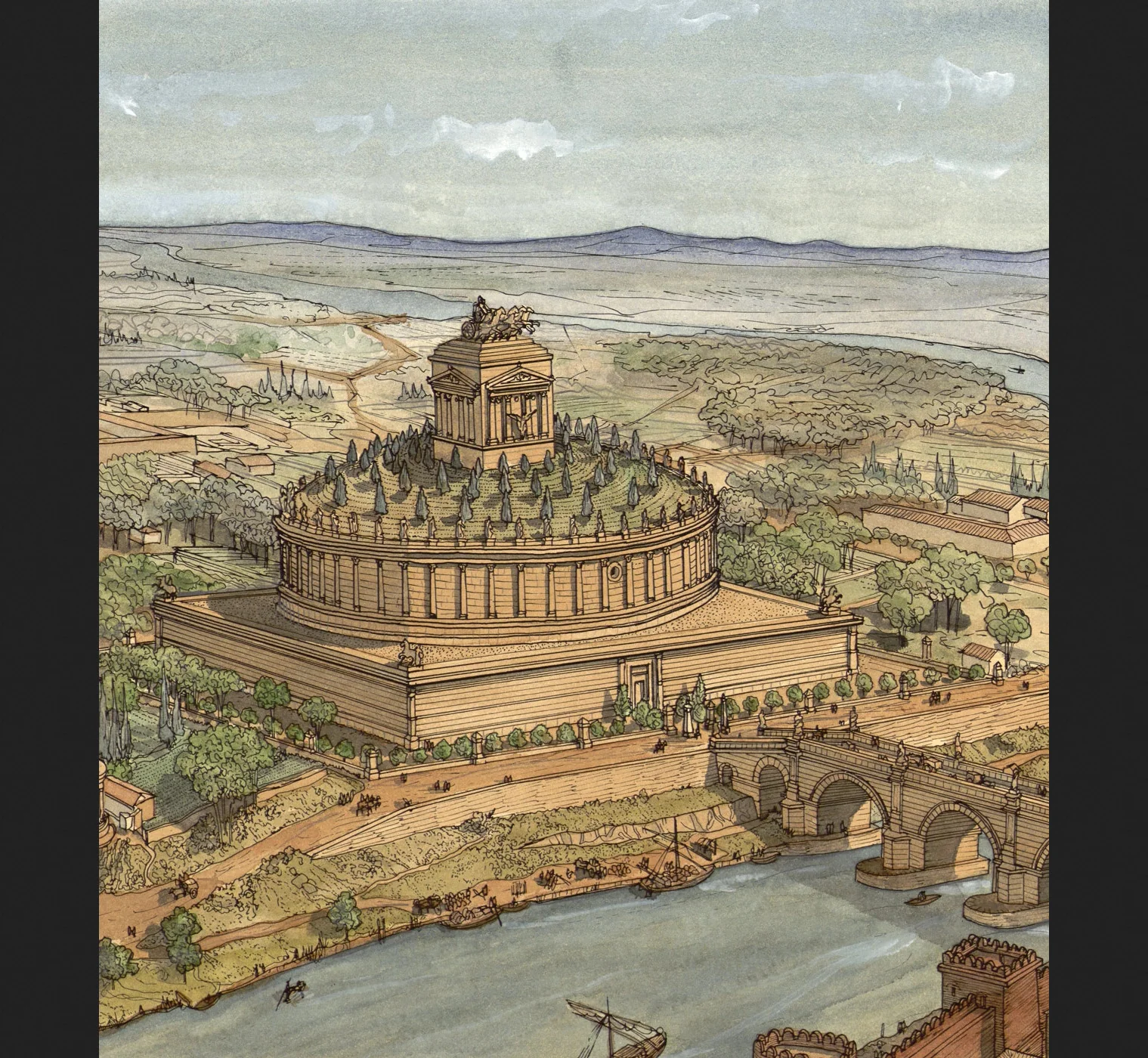
Hadrian returned to Rome late in life with a global gaze, translating experience into a mausoleum that saluted Augustus while asserting his own aesthetics.
1. Augustan Precedent, Hadrianic Reply
- Proportional respect: kept overall mass below Augustus’ tumulus scale, but intensified decorative program.
- Summit program (lost): ancient sources and later reconstructions suggest a gilded quadriga with Hadrian as charioteer—imperial apotheosis in motion.
2. Construction & Completion
- Start: c. 135 CE; completion under Antoninus Pius in 139 CE after Hadrian’s death in 138.
- Materials: concrete core, brick facings, marble revetments, bronze ornament—palimpsest echoes remain in later fortress skin.
3. Processional Choreography
The helical ramp staged a dignified ascent: family, priests, and guards spiraled towards the central chamber, aligning ritual movement with cosmic symbolism of circular return.
4. The Imperial Burials
| Period | Interments | Notes |
|---|---|---|
| 139–161 CE | Hadrian, likely Vibia Sabina, then Antoninus Pius | Dynastic continuity secured |
| 2nd–3rd c. | Successive Antonine/Severan members | Fragments in texts/archaeology |
| 217 CE | Caracalla (traditionally last) | End of imperial ashes here |
5. Loss & Spoliation
Sacks and later reuse stripped bronzes and precious urns; funerary contents dispersed—what survives is the armature of a once-sumptuous machine for memory.
6. Reading the Present for the Past
- Drum mass and ramp survive within the fortress; terrace vantage hints at where the statuary crown once ruled the skyline.
Bottom Line
Begin your visit with the tomb: seeing a fortress is richer when you first imagine a shimmering quadriga atop a serene imperial memorial.
À propos de l’auteur

Telmo Rolando
Ce guide éditorial indépendant synthétise les informations officielles destinées aux visiteurs et des sources historiques reconnues, sans revendiquer d'affiliation avec le Castel Sant'Angelo ou le ministère italien de la Culture.
Tags
Comments (0)
Loading comments...